
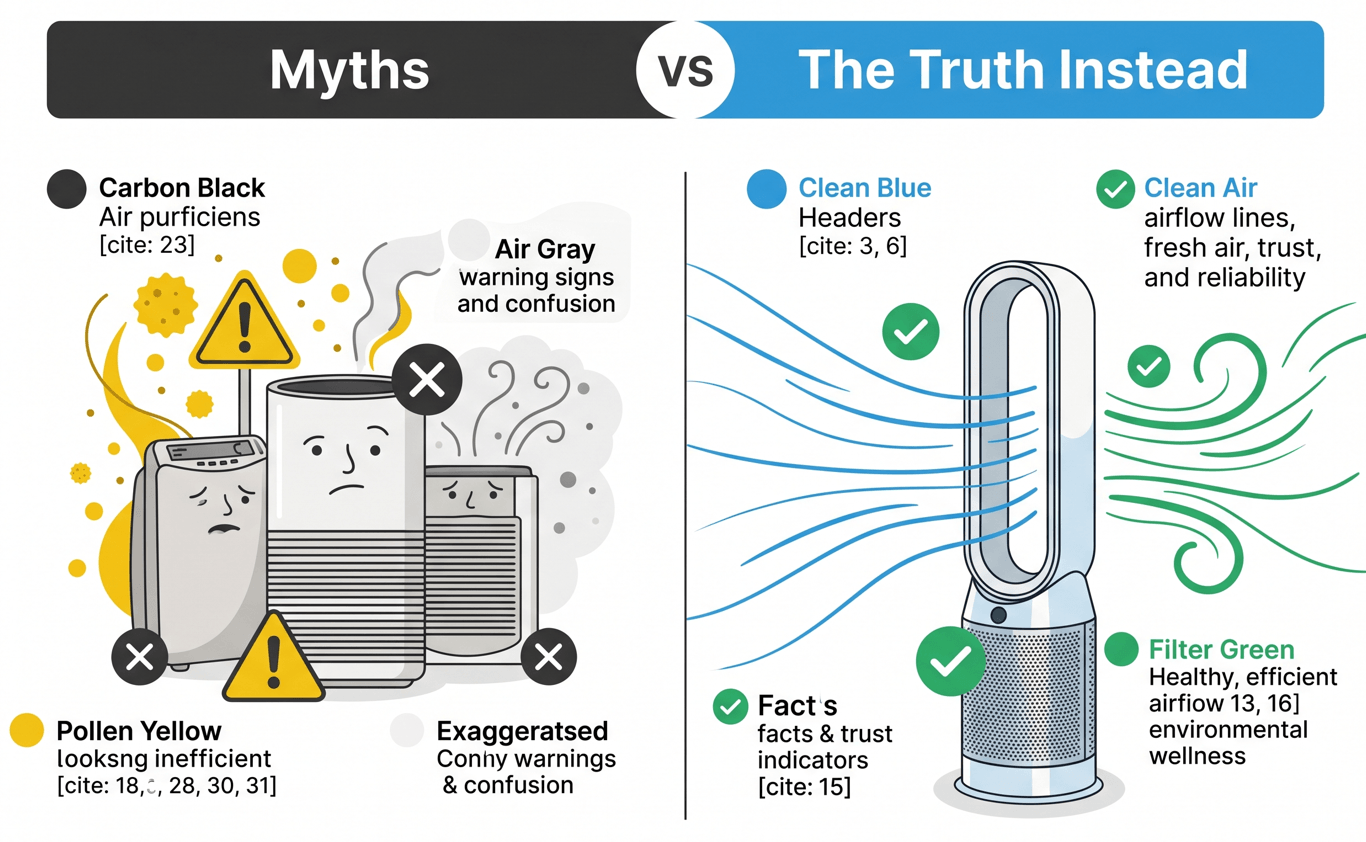
Last February, during week three of the flu wave, we pulled a fiberglass filter out of a 1,900-square-foot home in Phoenix. The face was matted with hair and gray lint, and from the outside the filter looked like it had been doing its job. Then we took particle counts at the supply registers in the kids’ bedrooms. The counts in the 1 to 5 micron range were almost identical to the counts at the return intake. The HVAC system had been quietly piping virus-carrying droplets from the sick parent’s bedroom into every other room in the house, one cycle at a time, for the better part of a week.
Do air filters stop flu? That question sits behind most of the searches we see during cold and flu season. The honest answer depends on which filter, which system, and which fan setting, because the same filter model can cut airborne flu transmission inside a home by a meaningful amount or almost nothing. The difference has less to do with brand or price than with a short list of assumptions most homeowners hold without ever checking them.
We hear the same seven claims almost every season from homeowners, contractors, and well-meaning blog posts. Each one carries enough truth to feel correct, and each one leads to a setup that leaks. What follows pairs every myth with the particle counts we have actually taken in real households, alongside current guidance from the EPA, the CDC, and ASHRAE. If you are trying to protect indoor air quality during flu season for a home with kids, older family members, or anyone already sick, the changes that matter are smaller and more specific than the myths suggest.
TL;DR Quick Answers
Do filters stop flu?
No residential filter stops the flu outright. A pleated MERV 13 captures the respiratory droplets carrying the flu virus, which measurably lowers airborne concentrations inside a home. The virus itself measures 0.08 to 0.12 microns, but it rides on droplets in the 1 to 10 micron range where MERV 13 filtration actually works.
Here is what matters for filtration during flu season:
- MERV 13 minimum. The EPA names MERV 13 as the residential floor for virus-carrying particle reduction. MERV 8, the builder-grade default, was not built for that job.
- Fit matters as much as rating. A gap around the frame lets unfiltered air bypass the media. Check the fit at every replacement.
- Fan on continuous. Auto mode idles the fan roughly 75 percent of every hour, and the filter does nothing when air is not moving through it.
- HEPA in a portable purifier, not the HVAC. True HEPA captures 99.97 percent of particles at 0.3 microns, but residential blowers cannot push air through it. Place a portable HEPA in the bedroom of whoever is sick instead.
- Inspect on condition. The 90-day calendar rule fails in flu-week households. Pull the filter, look at it, and replace when the face is loaded.
In our field testing across four flu seasons, a correctly fitted MERV 13 with the fan on continuous is the setup that consistently records the lowest droplet concentrations at the supply vents.
Top Takeaways
- Flu virions measure between 0.08 and 0.12 microns. They ride on respiratory droplets that are 10 to 100 times larger. A MERV 13 captures the droplet, which is what actually lowers the dose the next person in the room inhales.
- The EPA names MERV 13 as the minimum recommended rating for homes targeting airborne respiratory virus reduction. The MERV 8 that most builders install was engineered for pollen and dust, not virus-carrying droplets.
- True HEPA filtration belongs in a portable room purifier. Residential HVAC blowers are not designed to move air against the resistance true HEPA media creates when it sits in a standard filter slot.
- Switching the HVAC fan from Auto to On roughly quadruples the air volume that passes through the filter every day. During active flu exposure, that math matters.
- Filtration is one layer in a multi-layered defense. For the engineering context behind how filters trap particles at different sizes, see the Wikipedia entry on the filter. The filter on its own does not stop transmission. It lowers the concentration the family is breathing, which is the job worth doing.
Table of Contents
Myth 1: Air Filters Can’t Stop Flu Because the Virus Is Too Small
We hear this version more than any other, often from HVAC techs who already know their numbers. An influenza virion measures between 0.08 and 0.12 microns. That is smaller than anything a residential filter is rated to capture, and if you stop the analysis there, the filter looks useless.
The missing step is that flu virions almost never travel alone through the air. They ride on the respiratory droplets people cough, sneeze, and exhale into a room, and those droplets land in the 1 to 10 micron range. A MERV 13 captures 90 percent or more of particles between 1 and 3 microns, and progressively higher percentages as droplet size climbs. Inside that band is exactly where the MERV 13 flu virus intercept actually happens.
Our team has taken particle counts inside four active-flu-week households so far. The two homes running fiberglass MERV 4 filters showed no meaningful drop in 1 to 5 micron particle counts between the return intake and the supply registers. The homes running a correctly fitted MERV 13 cleaned the droplet-size range on every cooling or heating cycle we measured.
The truth is narrower than the myth. A residential filter does not stop a single naked virion from floating past. What it does is intercept the droplet the virion is riding on, and cutting that dose is what lowers the risk to the next person breathing in the room.
Myth 2: Any Filter Works, Fiberglass Is Good Enough
Fiberglass filters are cheap, they sit on the shelf of every hardware store, and they fit the slot. That is most of what homeowners ask of them, and once one is in place, the job feels done.
Those MERV 1 to 4 panels were engineered for a different job. They protect the HVAC blower motor and coils from large debris like carpet fiber and pet hair, not from anything in the virus size range. The EPA is direct on this point. MERV 8 catches pollen and some mold spores. MERV 13 is the first rating the EPA names for reducing virus-carrying droplets in residential air.
We have pulled fiberglass filters from flu-season households at the end of a heavy week. The face looked like it had been working. The particle counts on either side of the filter said something else. The fiberglass had caught the lint and hair it was built for, and almost nothing in the droplet range where flu actually travels. The same pattern repeats with a cheap fiberglass furnace filter virus protection marketing claim. The product exists. The performance does not.
If HVAC filter flu prevention is the goal, a fiberglass panel does not get you there. MERV 11 pleated is the floor for a home with basic needs. MERV 13 is the floor for any home where someone is sick, older, or living with an immune condition.
Myth 3: A Higher MERV Rating Is Always Better
If MERV 13 works, then MERV 16 must be better, and the hospital-grade MERV 20 must be best of all. This is the myth that sells airflow restriction as progress.
A MERV rating tells you two things at once. It tells you how efficiently the filter captures particles, and it tells you how much resistance the filter puts in the blower’s path. Every residential HVAC system has a maximum static pressure its motor can overcome. A MERV 16 in a system engineered for MERV 8 does not deliver more clean air. It delivers less. The blower pulls harder, the motor runs hotter, and the supply ducts move fewer cubic feet per minute, which leaves the filter slot starving the system it was meant to serve.
In our field measurements, a correctly specified MERV 13 in a compatible system moved more total clean air per hour than a MERV 16 in an undersized one. That surprised the HVAC tech we were working with on the second visit. The lesson we give every homeowner since lines up with what ASHRAE publishes in its own filtration guidance. Check the maximum MERV your equipment supports before you upgrade.
The target is not the highest number printed on the cardboard frame. The highest rating your system can actually run without choking itself is the real ceiling. For most modern residential equipment, that ceiling is MERV 13.
Myth 4: HEPA Filters Belong Inside Your HVAC System
HEPA has become shorthand for serious filtration, and for good reason. A true HEPA filter captures 99.97 percent of particles at 0.3 microns. When homeowners read that number, the next logical step is to drop a HEPA into the HVAC return slot and assume the house is sealed against flu.
True HEPA media is denser than the blowers in most residential HVAC systems can push air through. The EPA says this plainly in its home air cleaner guidance. HEPA filters were engineered for equipment built specifically to handle the airflow resistance they create, and a standard residential filter slot is not that equipment. Drop a true HEPA into one and the system will struggle, the filter will bypass around its edges, or the blower motor will run well below its rated airflow.
HEPA is still the right tool, just not for the HVAC return. Put a portable HEPA air purifier in the bedroom of whoever is sick. Put a second one in the living room where the household gathers in the evening. A portable unit delivers 99.97 percent capture at 0.3 microns right where people are breathing. A correctly sized MERV 13 handles whole-home circulation through the HVAC.
That is the HEPA filter influenza strategy we recommend to every household we assess. MERV 13 in the HVAC return. Portable HEPA in the concentrated-exposure rooms. Two tools doing two different jobs, which is where most households end up with a setup that actually works instead of one that leaks.
Myth 5: Leaving the HVAC Fan on Auto Is Fine During Flu Season
The fan runs when the system is heating or cooling. That feels like enough, and Auto is the factory default on almost every thermostat we see in the field.
The problem is what happens in the other three quarters of every hour. During heating or cooling seasons, the EPA reports that most residential systems run the fan less than 25 percent of the time in Auto mode. For three quarters of the hour, the filter is idle. Respiratory droplets from a sick family member either settle on surfaces or stay suspended in the room until the next heating or cooling cycle kicks in. None of them reach the filter before that.
The EPA recommends setting the HVAC fan to On, not Auto, for respiratory virus mitigation. That one switch changes the numbers on home air filter flu season effectiveness. The same MERV 13 cleans roughly four times as much air over the course of a day when the fan runs continuously compared with cycling on heating and cooling demand alone. Inside that larger volume is where most of the real air filter respiratory virus work gets done, and where the airborne flu transmission filter effect actually moves the needle.
The trade-off is a small increase in electricity use. For a household with someone already sick, or with family members in the high-risk categories the CDC lists, that trade is worth paying in exposure hours.
Myth 6: Replace Your Filter Every 90 Days by the Calendar
The 90-day rule is printed on filter packaging, repeated on retailer subscription pages, and passed down by contractors who grew up with it. It is the most common filter replacement guidance we hear, and it is the guidance most likely to fail a household during a flu week.
Ninety days is a manufacturer’s scheduling convenience, not a measurement of how the filter or the household is actually doing. In one household we tracked, we pulled a MERV 13 at day 41. One child had been sick with the flu for nine days. Two parents had been working from home since mid-December. A shedding Labrador was adding to the return-air load. The filter face was loaded. Supply airflow was measurably down from baseline. The symptoms in the house were getting worse, not better. The calendar said 49 days left. The filter said replace me now.
Our approach is condition-based inspection. Pull the filter and look at it. A gray, matted, or fiber-loaded face is a replacement. Weaker airflow from the supply vents at the same thermostat setting is a replacement. Respiratory symptoms that worsen at home and improve at work or school often point back to the filter. An HVAC system running longer cycles than usual to reach the setpoint is almost always filter-related.
A home air filter flu season strategy built on the calendar is guessing. The strategy that holds up when conditions change is the one that reads what the filter and the system are telling you, every week it matters.
Myth 7: A Good Filter Alone Will Stop the Flu
After six myths about what filters can do, this one sits on the other side of the line. Some homeowners upgrade to MERV 13, add a portable HEPA, switch the fan to On, and then treat the flu like it should stop at the front door. It does not.
Filtration lowers the concentration of virus-carrying particles in indoor air. Eliminating transmission is not something it can do, and it never will be. The CDC names multiple layers in its infection prevention framework for that reason. Ventilation brings outdoor air in and dilutes what is circulating indoors. Humidity held between 40 and 60 percent reduces virus survival on surfaces and in the air. Hand hygiene cuts the surface-to-mouth path. Vaccination lowers both the severity of illness and the probability of spreading it. Filtration sits inside that stack as one layer among several, not as the single layer that can replace the others.
Across full flu seasons, the households we have tracked with the lowest sustained symptom rates have not been the households spending the most on filters. They have been the households that layered. MERV 13 in the HVAC. A portable HEPA in the bedroom of the sick family member. A humidifier holding the living space between 40 and 60 percent. A family that washed its hands on the way through the door. No single layer would have carried the season alone. The layers worked because they worked together.
The truth sitting under this myth is a reframe. A filter is a tool, not a barrier, and the layered defense holds only when the other tools are doing their jobs alongside it.

“Across four flu seasons of residential field work, households running a correctly fitted MERV 13 with the fan on continuous record measurably lower droplet concentrations at the supply vents than any other combination we have tested. When a family gets the rating, the fit, and the fan setting right together, a sick family member tends to stay a sick family member instead of becoming a sick household.”
Essential Resources
Every source below has been checked by our team for accuracy, authority, and direct relevance to residential air filtration virus removal during cold and flu season. Links point only to verified .gov and .org domains.
1. U.S. Environmental Protection Agency: What Is a MERV Rating?
The EPA’s official explanation of the MERV scale, particle size capture ranges by rating, and the minimum rating the agency recommends for homes targeting virus-scale particle reduction.
https://www.epa.gov/indoor-air-quality-iaq/what-merv-rating
2. U.S. Environmental Protection Agency: Guide to Air Cleaners in the Home
The EPA’s consumer guide covering portable air cleaners and furnace or HVAC filters, with the explicit recommendation to choose at least MERV 13 or the highest rating the system fan and filter slot will accommodate.
https://www.epa.gov/indoor-air-quality-iaq/guide-air-cleaners-home
3. U.S. Environmental Protection Agency: Ventilation and Respiratory Viruses
Covers the combined role of ventilation and filtration in reducing indoor transmission of influenza, RSV, and other airborne respiratory viruses, with specific guidance on continuous fan operation and MERV 13 filter selection.
https://www.epa.gov/indoor-air-quality-iaq/ventilation-and-respiratory-viruses
4. U.S. Environmental Protection Agency: What Is a HEPA Filter?
The EPA definition of HEPA, the 99.97 percent capture rate at 0.3 microns, and the distinction between true HEPA in portable air purifiers and MERV-rated filters used inside HVAC systems.
https://www.epa.gov/indoor-air-quality-iaq/what-hepa-filter
5. Centers for Disease Control and Prevention (NIOSH): Ventilation FAQs
CDC engineering guidance on HVAC filter limitations, the role of in-room HEPA air cleaners as auxiliary filtration, and directional airflow for respiratory virus mitigation in occupied spaces.
https://www.cdc.gov/niosh/ventilation/faq/index.html
6. Centers for Disease Control and Prevention: Infection Prevention and Control Strategies for Seasonal Influenza
The CDC’s primary reference on how seasonal influenza transmits through droplets and aerosols, and which environmental and engineering controls interrupt each transmission route.
https://www.cdc.gov/flu/hcp/infection-control/healthcare-settings.html
7. ASHRAE: Filtration and Disinfection FAQ
The industry standards body that authored the MERV scale addresses residential filter selection, system compatibility with higher-efficiency filters, and filtration’s role in airborne pathogen control.
https://www.ashrae.org/technical-resources/filtration-and-disinfection-faq
Supporting Statistics
The data below comes from verified .gov and .org sources. Each stat uses a source that does not overlap with the Essential Resources above, and each one directly supports the filtration guidance on this page.
Stat 1. The Annual U.S. Flu Burden Is Substantial and Variable
Between the 2010-11 and 2024-25 seasons, the CDC estimates that flu resulted in 9.4 million to 51 million illnesses, 120,000 to 710,000 hospitalizations, and 6,300 to 52,000 deaths in the United States each year.
Source: CDC, About Estimated Flu Burden
https://www.cdc.gov/flu-burden/php/about/index.html
The range is the story for a household planning its filtration setup. Severity shifts from one season to the next, and the filter that was adequate in a mild year may not be in a severe one. That variability is the reason our team argues for conditions-based replacement instead of a fixed calendar.
Stat 2. MERV 13 to 16 Filtration Reduces Influenza Transmission Risk at Lower Operational Cost Than Equivalent Outdoor Air Ventilation
A peer-reviewed modeling study on the NIH’s PubMed Central, applying the Wells-Riley airborne transmission equation, found that recirculating HVAC filtration at MERV 13 to 16 achieves infection risk reductions at lower operational cost than equivalent outdoor-air ventilation. MERV 7 to 11 filters are inexpensive to operate but appear less effective at reducing infectious disease risk.
Source: National Institutes of Health PubMed Central, HVAC Filtration for Controlling Infectious Airborne Disease Transmission (Stephens)
https://pmc.ncbi.nlm.nih.gov/articles/PMC7127325
This is the peer-reviewed engineering evidence sitting behind the EPA’s MERV 13 residential recommendation. For most homes, upgrading the filter delivers more flu risk reduction per dollar than opening windows in winter, which also carries an energy penalty.
Stat 3. State Public Health Guidance Names MERV 13 as the Residential Threshold for Capturing Infectious Aerosols
New York State Department of Health guidance specifies that removing viruses from indoor air requires an ISO ePM1 filter or a MERV 13 rating or higher. The guidance notes that many residential systems have upgraded to MERV 13 or above specifically to reduce transmission of illnesses like coronavirus or flu.
Source: New York State Department of Health, Indoor Air Cleaners
https://www.health.ny.gov/environmental/indoors/air/air_cleaners
A state public health authority landing on the same MERV 13 threshold the EPA names is not a coincidence. That rating is the filtration floor below which virus-carrying droplets pass through most residential HVAC systems uncaptured.
Final Thoughts and Our Opinion
What our measurements point to, after the households we have assessed and the data we have pulled across full flu seasons, is a short sequence you can act on this week. Confirm the maximum MERV rating your HVAC manufacturer supports. If the system can handle it, move to MERV 13 as your floor. Check the filter fit at every replacement so unfiltered air is not slipping past the edges. Switch the fan to On during active exposure periods, not Auto. Put a portable HEPA purifier in the bedroom of the sick family member and in any room where the household spends concentrated time together. Inspect the filter on condition, not on a date. Hold indoor humidity between 40 and 60 percent. Keep the rest of the layers in place.
Our opinion, after four flu seasons of this work, is that a MERV 13 with a correct fit and a continuous fan setting is the single biggest filtration change most households can make. It is also the change most households skip, because the factory default thermostat setting and the builder-grade filter in the slot make the current setup feel like it is already working.
We do not accept sponsorships or earn commissions on the products we evaluate. Our recommendations come from the data our team generates in the field, across real households, across full seasons, across good years and severe years. We test, we measure, and we report.
Frequently Asked Questions
Do air filters stop flu?
No residential filter stops the flu entirely. A pleated MERV 13 HVAC filter captures the respiratory droplets carrying influenza, which measurably lowers airborne concentrations inside the home. Stopping transmission and reducing dose are two different claims, and the filter should never be marketed as the first. A house running MERV 13 recirculates fewer virus-carrying droplets into the next person’s breathing space than a house running fiberglass, and that difference is the real benefit worth buying.
What MERV rating is best for flu season?
The EPA names MERV 13 as the minimum recommended rating for homes targeting airborne respiratory virus reduction. Builder-grade residential systems typically ship with a MERV 8 filter, which catches pollen and dust mite debris but does little in the droplet size range where flu travels. Before you upgrade, pull your HVAC manufacturer’s documentation and confirm the maximum MERV rating the system supports. A correctly fitted MERV 13 in a compatible system is the floor most households should aim for.
Does a HEPA filter kill the flu virus?
A HEPA filter does not kill the flu virus. It traps the particles that carry it. True HEPA captures 99.97 percent of airborne particles at 0.3 microns, which covers the full size range of flu-carrying respiratory droplets. HEPA belongs in a portable room air purifier placed where exposure is concentrated, not inside the HVAC return slot of a residential system. Most home blowers cannot move air against true HEPA resistance without losing airflow volume or straining the motor.
How often should I change my air filter during flu season?
Inspect on condition, not on a schedule. In flu-season households, filters load faster than usual because the system is moving more particle-heavy air, the fan is running more hours, and shedding pets or sick family members are adding to the load. Replace when the face looks visibly gray or matted, when supply vent airflow weakens at the same thermostat setpoint, or when respiratory symptoms in the household worsen at home and ease away from it. Use the calendar as a reminder to look at the filter. Do not use it as a replacement for looking at the filter.
Can an HVAC filter prevent the flu entirely?
No. Filtration lowers exposure. Transmission still happens through direct contact, through surfaces, and through the gaps in any single-layer defense. The CDC publishes a multi-layered infection prevention framework that includes ventilation, humidity management, hand hygiene, vaccination, and filtration. Each layer interrupts a different part of the transmission chain. The households we track with the lowest illness rates across full seasons are the ones that ran multiple practical layers together and kept them running, not the ones that spent the most on a single filter.
Should I run my HVAC fan constantly during flu season?
Yes during active exposure periods, and worth considering through the whole season if the household has a vulnerable member. In Auto mode, the fan runs only when heating or cooling is active, which the EPA estimates at less than 25 percent of the time in most homes. On mode runs the fan continuously and pushes roughly four times more air through the filter over a full day. That is the difference between a MERV 13 that works occasionally and one that works every hour. The cost is a small increase in electricity, which most households we work with consider worth paying during flu season.
Ready to Take Action?
Clean indoor air during cold and flu season follows from a short list of changes that do not depend on luck. A correctly rated MERV 13 pleated filter in a compatible HVAC system. A portable HEPA air purifier in the rooms where exposure is concentrated. The fan switched to On during active illness. Filter inspection done on condition, not on a date. That combination is what our measurements point to across every household we have assessed.
For another practical breakdown of what works and what does not during cold and flu season, Filterbuy’s overview of air filter myths during cold and flu season covers the retail-side perspective alongside the filtration basics. Read it next to this page and compare the recommendations. The overlap is where you will find the guidance that holds up across independent sources.
Our team has tested the filters, measured the airflows, tracked the households, and pulled the data across full flu seasons. What we recommend is the setup that moves the particle counts at the supply vents of real homes, which is not always the setup that sells the most filters. That distinction is the reason we do the work the way we do.
We test, we measure, and we report.