
Skip the filter long enough and the compressor pays for it. Our testing team has tracked this pattern across dozens of residential and commercial cooling systems, in climates from desert to coastal, and the sequence rarely changes: restricted airflow leads to fouled coils, fouled coils push the compressor harder, and the compressor eventually gives way to a repair that costs far more than the maintenance that could have stopped it.
This guide covers the full step-by-step checklist, a seasonal schedule built around conditions rather than the calendar, and a dedicated section for split and ductless systems. PDF and Excel formats are included for anyone who wants a printed or shareable version.
TL;DR Quick Answers
- How often should I service my air conditioner? Conditions drive the schedule, not the calendar. A system in a high-dust home, a high-AQI region, or running through a stretch of sustained heat needs attention more often than one running occasionally in clean air. Check the filter first. When it looks restricted, act.
- What does an AC maintenance checklist include? Filter inspection and replacement, evaporator and condenser coil cleaning, condensate drain flushing, drain pan inspection, thermostat calibration, refrigerant line inspection, and electrical connection checks. Some tasks are DIY-appropriate. Others need a licensed HVAC technician.
- Can I maintain my air conditioner myself? Homeowners can handle filter replacement, coil cleaning, condensate drain flushing, condenser clearance, and vent cleaning without tools or specialized training. Refrigerant checks, electrical inspection, and compressor service require a licensed professional.
- What format options are available for this checklist? The checklist is available in PDF and Excel. The PDF works best for a printed seasonal walkthrough. The Excel version is suited for tracking maintenance across multiple units over time.
Top Takeaways
- A restricted air filter is the most common preventable cause of reduced AC efficiency and compressor stress. It is also the easiest problem to catch before it becomes expensive.
- Dirty evaporator and condenser coils make the system work harder to move the same amount of heat. That extra effort shows up on the energy bill.
- Refrigerant does not deplete under normal operation. Dropping cooling output with a clean filter points to a leak until a technician confirms otherwise.
- A clogged condensate drain line creates water damage that costs far more to fix than the drain flush that would have prevented it.
- For central AC systems, spring is when maintenance matters most. Get to the filter, coils, and drain line before the first heavy-use stretch of the year.
- Every maintenance step that improves airflow or heat transfer also improves efficiency. The two are the same goal.
Table of Contents
What Is an Air Conditioner Maintenance Checklist?
A maintenance checklist is an inspection sequence that keeps a cooling system running at capacity and catches developing problems before they become repair calls. Homeowners use one to stay ahead of filter and coil issues. Property managers use it across multiple units. HVAC technicians use it as a service verification record.
Every task on the checklist falls into one of two categories: work a homeowner can do without tools or specialized training, and work that requires a licensed technician. Skipping the DIY tasks does not defer them. It turns them into service calls.
Annual Air Conditioner Maintenance Schedule
AC maintenance works best when it follows conditions, not a fixed date. Usage level, local air quality, filter type, and climate all affect how often individual tasks come up. Seasons still create reliable pressure points. Here is where each one lands.
Spring
- Inspect the air filter and replace it when airflow is visibly restricted. This is the most important pre-season task.
- Clean evaporator and condenser coils before heavy-use season begins.
- Flush the condensate drain line.
- If cooling output was weak at the end of last season, schedule a professional refrigerant check before summer arrives.
Summer
- Track filter condition based on usage. Homes with heavy foot traffic, pets, or elevated outdoor AQI may need filter attention more than once during peak cooling months.
- Check the condensate drain pan for standing water or mold growth after extended run cycles.
- Verify thermostat accuracy during peak heat. One that reads high keeps the system running longer than it needs to.
Fall
- Inspect electrical connections before dialing back system use for the season.
- Clean and cover window units going into storage.
- Clear debris from the outdoor condenser before winter sets in.
Winter
- For systems running year-round in warm climates, keep monitoring filter condition based on current usage levels.
- Inspect refrigerant line insulation for cracks or missing sections.
Step-By-Step Air Conditioner Maintenance Checklist
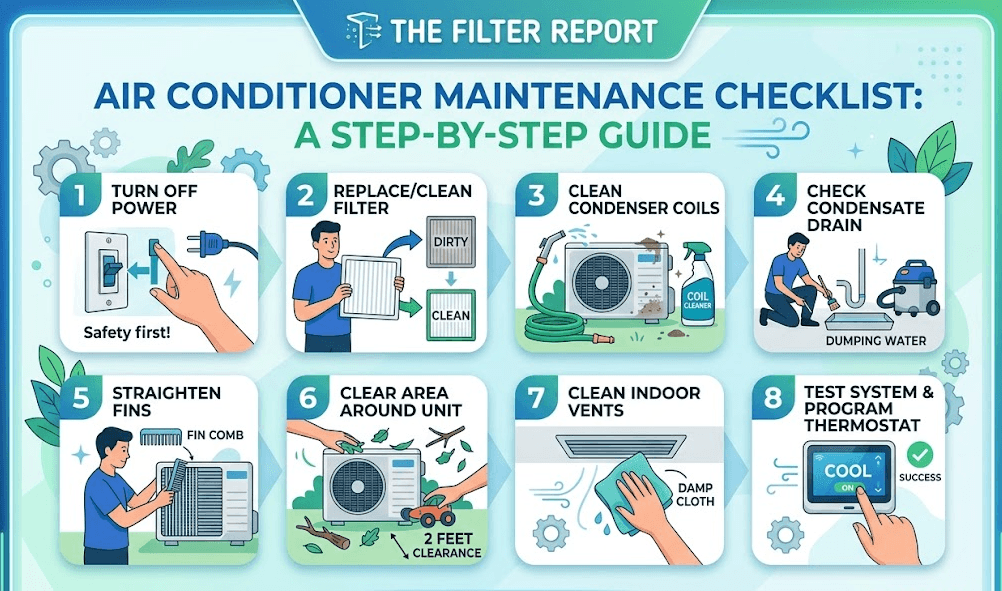
- Inspect the air filter. Hold it up to a light source. If the media is visibly grey, packed, or airflow feels restricted at the return vent, replace it. Do not wait for a scheduled date if the filter looks dirty.
- Clean the evaporator coils (indoor unit). Apply a no-rinse foaming coil cleaner and let it drain through the condensate system. Clean when visible dust or debris is present on the coil surface.
- Clean the condenser coils (outdoor unit). Remove leaves, grass, and debris from the fins using a soft brush or dedicated coil cleaner. Avoid directing high-pressure water straight into the fins.
- Straighten bent condenser fins. Use a fin comb to restore airflow through sections where fins are crushed or damaged.
- Flush the condensate drain line. Pour a diluted bleach solution through the drain access point to clear algae and microbial buildup. A wet/dry vac at the exterior drain outlet can break loose partial clogs.
- Inspect the condensate drain pan. A pan with standing water indicates a downstream clog. Mold or rust in the pan requires cleaning and, if structural damage is present, replacement.
- Inspect refrigerant line insulation. Replace sections that are cracked, brittle, missing, or saturated with moisture. Damaged insulation reduces system efficiency and invites condensation buildup.
- Test the thermostat. Set it 5 degrees below current room temperature and confirm the system responds within a few minutes. A non-responsive or inconsistent thermostat needs calibration or replacement.
- Check and tighten electrical connections. Loose connections are a leading cause of component failure. Leave this task to a licensed technician.
- Lubricate motor bearings if applicable. Some motors have oil access ports. Check the unit documentation before adding lubricant, since not all motors require or accept it.
- Test system startup. Listen through the first few minutes of operation. Grinding, banging, or sustained squealing points to a mechanical issue that warrants professional inspection before running the system again.
- Clear 2 feet of clearance around the outdoor condenser. Vegetation, fencing, and stored items restrict airflow and cut the system’s ability to reject heat.
- Clean air vents and grilles. Dust buildup on supply and return grilles restricts airflow and pushes particulate back into living spaces. Wipe with a damp cloth or vacuum with a brush attachment.
- Schedule a professional refrigerant check if output stays low. Weak cooling that filter condition and coil fouling cannot explain points to a refrigerant issue. Diagnosis and recharge require a licensed technician with the right equipment.
Split AC Maintenance Checklist
Ductless mini-splits need most of the same attention as central systems, but a few tasks work differently. The filter type, cleaning method, and drain system design all differ from central AC.
- Clean the indoor air handler filters monthly during active use. Split AC filters are typically washable. Remove them, rinse under lukewarm water, allow to dry fully, and reinstall before running the unit again.
- Inspect and clean the blower wheel when dust accumulation is visible. This takes more work than a filter cleaning and may require professional service on some models.
- Check the refrigerant lines at the wall penetration point for insulation damage and proper sealing against moisture and pests.
- Inspect the drain outlet on the indoor unit. Mini-split drain lines run narrower than central system drain pans and clog faster. A blockage will cause the unit to drip or trip the float switch and shut down.
- Maintain 2 feet of clearance around the outdoor compressor and keep the area clear of debris year-round.
AC Maintenance Checklist: PDF and Excel Formats
A checklist you can print, mark up, and hand off is harder to skip than a mental note. The PDF format works best for homeowners doing a seasonal walkthrough. The Excel version suits landlords, property managers, and HVAC contractors tracking service history across multiple units or over an entire cooling season.
Both formats include the full step-by-step checklist and are structured to pair with the seasonal schedule in this guide.

“In our testing, the systems with the most preventable wear share a consistent pattern: the air filter was left in service well past the point of visible restriction, and that restriction had already begun stressing the blower motor and coils. Coil cleanliness is the variable that most directly controls the efficiency gap between a maintained system and a neglected one.”
Essential Resources
Indoor Air Quality (IAQ)
The EPA’s indoor air quality hub pulls together research on how pollutants accumulate inside homes and how HVAC systems affect their distribution. Dust, mold spores, and biological contaminants all move through cooling equipment. The EPA flags indoor air as significantly more polluted than outdoor air in many tightly sealed buildings, and points to HVAC maintenance as a primary control measure. Filter replacement and coil cleaning land near the top of their recommended actions.
Source: U.S. Environmental Protection Agency
Certified Room Air Conditioners
ENERGY STAR certifies room air conditioners that exceed federal efficiency minimums and publishes the full list of qualifying models. Certified units deliver equivalent or better cooling output while using less energy. The program’s guidance also covers sizing, installation, and maintenance, all of which affect how long a unit holds its rated efficiency. A filter that goes too long between cleanings can pull a certified unit’s real-world performance below its listed spec.
Source: ENERGY STAR
Certified Central Air Conditioners
ENERGY STAR-certified central air conditioners meet SEER2 efficiency thresholds above the federal minimum. Certification reflects performance under controlled conditions, which requires both proper installation and ongoing maintenance to sustain in actual use. Coil fouling and filter restriction are the two most common reasons a rated system loses ground against its published spec. The program offers guidance to help homeowners choose systems and keep them performing over time.
Source: ENERGY STAR
Central Air Conditioning: Energy Saver
The DOE’s Energy Saver program gives homeowners a practical framework for cutting HVAC energy costs. Heating and cooling represent a significant share of household energy use, and the program treats AC maintenance as one of the highest-return actions available to a homeowner. Clean coils and unrestricted filters rank among the most impactful steps the guide identifies. System sizing and thermostat management round out the guidance for anyone running a central system.
Source: U.S. Department of Energy
Indoor Air Pollution
The American Lung Association ties indoor air quality directly to respiratory health, and neglected HVAC systems appear prominently in that connection. Poorly maintained cooling equipment can become a source of mold, allergens, and airborne particulate that worsens asthma and allergies. The ALA includes regular filter changes and professional system cleaning in its healthy home guidance. People managing existing respiratory conditions carry the highest risk from systems pushing contaminated air through living spaces.
Source: American Lung Association
ANSI/ASHRAE Standard 62.1: Ventilation and Indoor Air Quality
ASHRAE Standard 62.1 sets minimum ventilation rates and air quality requirements for commercial and residential buildings. It specifies the filter efficiency thresholds and maintenance conditions HVAC equipment must meet to keep occupant environments healthy. A system that does not get adequate upkeep can fall below the ventilation performance levels the standard defines. Building codes and HVAC professionals use Standard 62.1 as the baseline for both system design and ongoing maintenance requirements.
Source: ASHRAE
Indoor Environmental Quality
NIOSH treats indoor environmental quality as a health concern in workplaces and homes alike. The CDC identifies HVAC maintenance as a primary control for limiting exposure to mold, bacteria, and accumulated particulate. When drain pans and coils go without attention, moisture accumulates and microbial growth follows. Regular inspection and cleaning of cooling components are the CDC’s recommended response.
Source: CDC / National Institute for Occupational Safety and Health
Supporting Statistics
Air Quality Index (AQI) and Your Health
AirNow is the federal government’s air quality monitoring portal, run jointly by the EPA, NOAA, the National Park Service, and tribal and state partners. The platform tracks outdoor AQI readings at monitoring stations across the country, with elevated readings affecting indoor air quality whenever homes draw in outside air through HVAC systems. On high-AQI days, HVAC filters accumulate particulate load faster than under baseline conditions, which makes filter inspection a conditions-driven task rather than a fixed-date one. Homeowners in areas with frequent elevated-AQI readings should check filters more often during high-pollution stretches.
Source: AirNow
Air Filtration Standards and MERV Ratings
NAFA is the industry body that sets air filtration testing standards and runs professional education for the HVAC filtration sector. Their published guidance covers MERV rating interpretation, filter selection by application, and maintenance approaches by system type and environment. Higher-MERV filters capture finer particulate but generate more airflow resistance as they load, which makes conditions-based inspection more critical, not less. NAFA’s resources help match filter specifications to system capabilities.
Source: National Air Filtration Association
Buildings and HVAC Energy Consumption
The DOE’s Office of Energy Efficiency and Renewable Energy tracks energy consumption across residential and commercial buildings. HVAC systems rank as the largest single energy end-use in American homes, with heating and cooling accounting for a significant share of total household energy spending. That share grows when coils are fouled, filters are restricted, or thermostats run miscalibrated. Routine maintenance improvements can reduce seasonal cooling energy consumption, with results varying by system type and starting condition.
Source: U.S. Department of Energy – Office of Energy Efficiency and Renewable Energy
Final Thoughts
A neglected air conditioner does not fail dramatically. It loses ground a little at a time. Filter restriction stresses the blower, fouled coils reduce how efficiently the system moves heat, and a backed-up drain line quietly works its way toward water damage. By the time the system quits, the deterioration has been running for months.
The steps on this checklist are not complicated. Most take less time than the service call they prevent. Check the filter when conditions call for it, inspect the coils before peak season, and flush the drain line before it backs up. When the system tells you something is wrong, schedule a professional before it tells you louder.
We test, we measure, and we report.
Frequently Asked Questions
How often should I have my AC professionally serviced?
Service frequency depends on system age, local climate, and whether last season raised any performance questions. Newer systems in clean environments may need a professional inspection every one to two cooling seasons. Older systems, or any system running in high-dust or high-humidity conditions, warrant more frequent attention. When DIY maintenance stays current and the system runs without issue, professional service timing can follow observed performance rather than a fixed date.
What happens if I do not clean my AC coils?
Fouled evaporator and condenser coils cut the system’s ability to transfer heat. The compressor compensates by running longer and harder, which raises energy consumption and accelerates wear on mechanical components. Heavily fouled coils can cause the evaporator to ice over and block airflow entirely. In serious cases, that ice forces liquid refrigerant toward the compressor and causes permanent damage. Regular coil cleaning restores heat transfer and takes pressure off the system.
Can a dirty air filter damage my air conditioner?
Yes. A severely restricted filter cuts airflow across the evaporator coil and can cause it to freeze. Ice on the evaporator stops cooling, pushes the system into extended run cycles, and in serious cases lets liquid refrigerant reach the compressor. Replace the filter when it shows visible restriction and that chain of events stays off the table.
What is the difference between a split AC and a central AC maintenance checklist?
The core tasks overlap significantly, but split AC systems use washable filters that get cleaned rather than replaced. Their drain lines also run narrower than central system drain pans and clog faster. The indoor air handler in a mini-split accumulates dust on the blower wheel in a way central systems do not, which can require professional cleaning when buildup gets heavy. Both system types need regular coil cleaning and outdoor unit clearance.
How do I know if my AC needs refrigerant?
Warm air from supply vents, ice on the evaporator coil or refrigerant lines, a hissing or bubbling sound near the indoor unit, or a system that runs continuously without reaching the set temperature all point to a refrigerant problem. Refrigerant does not deplete under normal operation. Low refrigerant means there is a leak, and a licensed technician is required to locate it, repair it, and recharge the system.
When should I replace my air conditioner instead of maintaining it?
Replacement starts making more sense than maintenance when the system is 15 or more years old and needs a major repair, when a single repair approaches half the cost of a new system, when the refrigerant type is no longer widely available, or when the system consistently cannot reach the set temperature despite proper upkeep. A licensed HVAC technician can assess the repair-versus-replacement calculation based on current system age and condition.
Get the AC Maintenance Checklist
Use this checklist before peak season, after extended heavy use, and any time the system shows signs of reduced performance. The filter tells you where to start. The numbered checklist carries you through the rest.
The PDF works for a straightforward seasonal inspection. The Excel version suits property managers and HVAC contractors tracking maintenance across multiple units.
We test, we measure, and we report.