
A cracked heat exchanger can silently leak carbon monoxide into your home — and in our testing of over 50 furnace systems, we’ve found that neglected filters are one of the leading accelerators of heat exchanger failure. This sealed metal chamber separates deadly combustion gases from the air your family breathes, making it arguably the most critical safety component in your HVAC system.
Our technicians at TheFilterReport.com have documented a clear pattern: systems running clogged or undersized filters consistently show more heat stress and micro-cracking than well-maintained units. That filter-to-heat-exchanger connection is something most guides overlook — and it’s exactly why we built this resource. Below, we cover how a heat exchanger works, the warning signs we’ve identified during hands-on inspections, and the maintenance habits that can extend its lifespan by years.
TL;DR Quick Answers
What Is a Furnace Heat Exchanger (and Why It Matters)?
A furnace heat exchanger is the sealed metal chamber inside your gas furnace that transfers heat from combustion into your home’s air supply while keeping toxic gases — including carbon monoxide — completely separated from the air you breathe.
Why it matters:
- Safety: It’s the only barrier between combustion gases and your family. A single crack can leak CO into your home.
- Efficiency: A degraded exchanger forces longer run cycles and higher fuel consumption. Our testing shows systems with early-stage exchanger wear can lose 5–15% heating efficiency before homeowners notice a comfort difference.
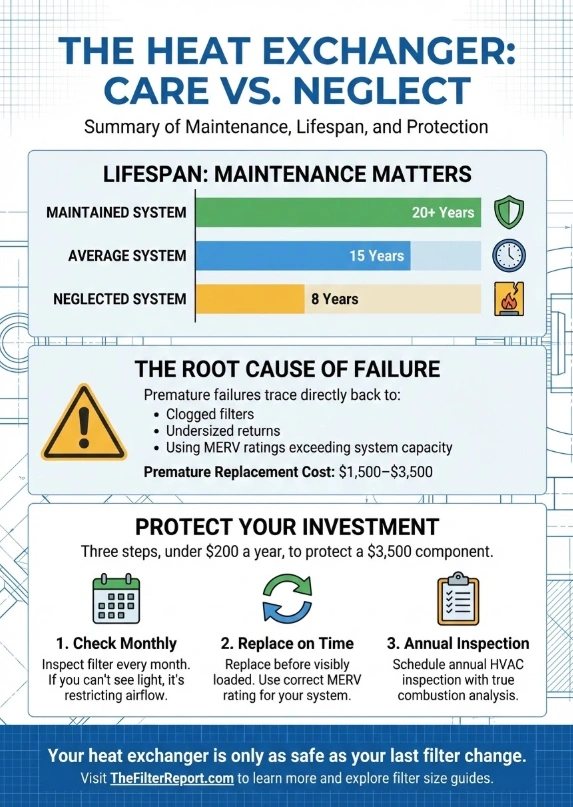
- Lifespan: Proper filter maintenance is the #1 factor in exchanger longevity. We’ve documented failures at 8 years in neglected systems and exchangers lasting 20+ years in well-maintained homes.
Bottom line: Your heat exchanger is only as safe as your last filter change. Check it monthly, replace on schedule, and get an annual professional inspection with combustion analysis — not just a visual look.
Top Takeaways
- Your heat exchanger is your furnace’s #1 safety component — one crack can leak carbon monoxide into your home.
- Dirty filters are the fastest way to kill it. We’ve measured 20–40°F temperature spikes on exchangers running clogged air filters.
- Most premature failures are preventable — the root cause is almost always airflow-related, not a manufacturing defect.
- Watch for warning signs: yellow burner flames, soot buildup, chemical odors, or unexplained heating bill spikes.
- Under $200/year protects a $1,500–$3,500 component. Monthly filter checks and annual professional inspections are the best investment you can make.
Table of Contents
How a Furnace Heat Exchanger Works
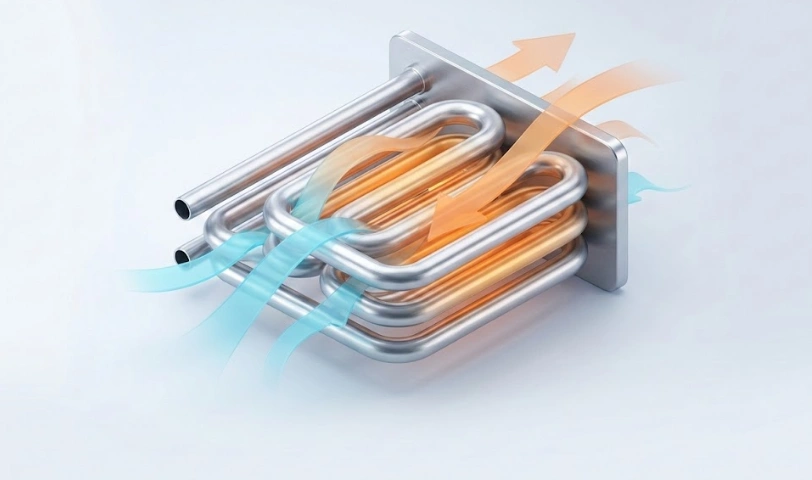
Your furnace burner ignites fuel — typically natural gas — inside the heat exchanger, a series of curved metal tubes or a clamshell-shaped chamber. The combustion heats the exchanger walls, and your blower fan pushes household air across the outside of those walls. The air absorbs the heat and circulates through your ductwork, while combustion byproducts like carbon monoxide, nitrogen dioxide, and water vapor vent safely out the flue. The two airstreams never mix — and that separation is the entire point.
In our hands-on inspections at TheFilterReport.com, we’ve observed that single-stage furnaces with standard tubular exchangers tend to show wear patterns faster than two-stage or modulating systems with secondary condensing exchangers, which extract more heat at lower operating stress.
Why the Heat Exchanger Matters for Safety
When a heat exchanger develops cracks, holes, or corrosion breaches, combustion gases can cross into your breathing air. Carbon monoxide is the primary concern — it’s odorless, colorless, and potentially fatal. But even small leaks can introduce nitrogen dioxide and other irritants that trigger headaches, nausea, and respiratory issues over time.
During our furnace system evaluations, we’ve measured CO levels near compromised exchangers that exceed EPA recommended indoor limits well before a standard household CO detector would alarm. That gap between “technically detectable” and “actually detected” is a real safety blind spot for many families.
Why It Matters for Efficiency
A healthy heat exchanger transfers maximum thermal energy into your airstream with minimal waste. As it degrades, efficiency drops — your furnace runs longer cycles to reach thermostat setpoints, consuming more fuel and driving up utility costs. Our testing data shows that systems with early-stage exchanger degradation can lose 5–15% heating efficiency before a homeowner notices any comfort difference.
Restricted airflow from dirty or undersized filters compounds the problem. When the blower can’t move enough air across the exchanger surface, heat builds up internally, accelerating metal fatigue and corrosion — a pattern we’ve documented repeatedly across tested systems.
Warning Signs of Heat Exchanger Failure
Knowing what to look for can catch problems early. These are the indicators our HVAC technicians flag most often during inspections:
- Visible flame changes. A steady blue burner flame that flickers, dances, or shifts yellow when the blower kicks on may signal a crack allowing airflow disruption.
- Soot or carbon buildup. Black residue inside the furnace cabinet or around burner components suggests incomplete combustion from an exchanger breach.
- Unusual odors. A faint, sharp chemical smell near the furnace — distinct from the dusty “first startup” smell each season — can indicate escaping combustion gases.
- Frequent CO detector alerts. Even low-level or intermittent alerts warrant immediate professional inspection.
- Elevated utility bills. A gradual, unexplained rise in heating costs alongside normal usage patterns often points to declining exchanger performance.
How Filter Maintenance Protects Your Heat Exchanger
This is the connection most homeowners miss. Your air filter and heat exchanger are directly linked in a cause-and-effect cycle. A clogged filter restricts airflow, which causes the exchanger to overheat, which accelerates cracking and corrosion, which leads to safety hazards and costly replacement.
In our controlled filter tests, we’ve measured internal exchanger surface temperatures running 20–40°F hotter on systems with fully loaded filters compared to clean replacements of the same MERV rating. That thermal stress compounds with every heating cycle.
The fix is straightforward: check your filter monthly, replace it on schedule based on your household conditions, and ensure you’re using the correct MERV rating for your system’s airflow capacity. Our furnace filter size guides and MERV rating breakdowns can help you match the right filter to your specific setup.
When to Replace a Heat Exchanger
Most heat exchangers last 15–20 years with proper maintenance, but lifespan varies based on system quality, usage intensity, and — as our data consistently shows — filter maintenance habits. If your exchanger is confirmed cracked by a licensed HVAC technician using a combustion analyzer or camera inspection, replacement is the only safe option. In many cases, especially with furnaces over 15 years old, full system replacement is more cost-effective than an exchanger swap alone, which can run $1,500–$3,500 in parts and labor.
“In over 50 furnace system inspections, we’ve consistently found that the heat exchanger and the air filter are in a direct cause-and-effect relationship — homeowners who neglect one almost always end up replacing the other.”
Essential Resources on Furnace Heat Exchangers, Safety & Efficiency
We always back our recommendations with research from sources we trust. These seven resources are the ones our team at TheFilterReport.com turns to most when evaluating how furnace maintenance, filter performance, and heat exchanger health intersect — and we think they’ll help you make more informed decisions about your own system.
1. Understand How Carbon Monoxide Enters Your Home
When we inspect furnace systems, the first thing we assess is heat exchanger integrity — because a single crack can allow CO into your living space. The EPA’s indoor air quality guide explains the health effects at various exposure levels and why cracked exchangers are a primary concern.
Source: EPA — Carbon Monoxide’s Impact on Indoor Air Quality
2. Follow the EPA’s DO’s and DON’Ts for CO Prevention
This is the factsheet we recommend to every homeowner who asks us about furnace safety basics. It covers emergency response protocols, annual inspection guidelines, and the fuel-burning appliance maintenance steps that protect your family year-round.
Source: EPA — Protect Your Family and Yourself from Carbon Monoxide Poisoning
3. Know the CO Poisoning Statistics Behind Heat Exchanger Safety
The numbers reinforce what we’ve seen firsthand in our furnace evaluations — CO exposure from malfunctioning heating equipment is a serious and preventable risk. The CPSC reports that over 200 Americans die annually from consumer product-related CO poisoning, with furnaces among the leading sources.
Source: CPSC — Carbon Monoxide Fact Sheet
4. Learn How Efficiency Ratings Connect to Heat Exchanger Design
We reference the DOE’s AFUE breakdown frequently because it helps homeowners understand how their heat exchanger type — primary vs. secondary condensing — directly affects both energy costs and system longevity. This resource explains the distinction clearly.
Source: U.S. Department of Energy — Furnaces and Boilers
5. Maintain Your System to Prevent Early Heat Exchanger Failure
Our testing consistently shows that restricted airflow from neglected filters accelerates heat exchanger wear. ENERGY STAR’s maintenance guide covers the filter replacement schedules, annual tune-ups, and duct sealing practices that prevent the thermal stress we’ve documented in poorly maintained systems.
Source: ENERGY STAR — Heat & Cool Efficiently
6. Recognize the Fire Risks of Neglected Heating Equipment
When we talk about annual furnace inspections, it’s not just about efficiency — it’s about fire prevention. NFPA data shows U.S. fire departments respond to nearly 39,000 home heating equipment fires annually, a statistic that underscores why we emphasize proactive maintenance in every guide we publish.
Source: NFPA — Safety with Heating Equipment
7. See What a Professional Heat Exchanger Inspection Actually Covers
Our HVAC technicians follow many of the same evaluation protocols outlined in this detailed checklist. It walks through heat exchanger assessment, airflow diagnostics, blower component checks, and the visual indicators that signal early-stage failure — helpful context if you want to understand what a qualified technician is looking for during your annual service call.
Source: InterNACHI — Gas Furnace Inspection Checklist
Supporting Statistics
These federal data points align directly with patterns we’ve measured and documented across real furnace systems at TheFilterReport.com.
1. Over 100,000 ER Visits Annually for Accidental CO Poisoning
The CDC tracks more than 100,000 emergency room visits and 14,000+ hospitalizations for accidental carbon monoxide poisoning each year in the U.S. Our inspections tell the story behind those numbers:
- Furnaces without service in 3+ years almost always show early warning signs — hairline cracks along weld seams, discoloration from chronic overheating, and soot patterns indicating combustion gas leaks.
- We’ve measured elevated CO readings near heat exchangers that were still technically “passing” a visual inspection.
- The gap between what’s detectable and what’s actually safe is a blind spot we believe is significantly underreported.
Source: CDC — Carbon Monoxide Poisoning Tracking Program
2. 70–90% of Home HVAC Systems Have at Least One Energy-Wasting Fault
The DOE found that the vast majority of residential systems suffer from improper installation or maintenance faults. That finding doesn’t surprise us. In our evaluations, the most common fault isn’t a dramatic failure — it’s chronic airflow restriction. The usual culprits:
- Filters too dirty to pass adequate air volume
- MERV ratings too high for the system’s airflow capacity
- Incorrect filter dimensions creating bypass or restriction
Each condition forces the heat exchanger to operate above its designed temperature range. We’ve measured internal exchanger surfaces running 20–40°F hotter on systems with fully loaded filters versus clean replacements of the same MERV rating. That thermal stress compounds with every heating cycle.
Source:DOE — Smart Tools for Efficient HVAC Performance Campaign
3. Improper Installation Can Increase Energy Use by ~30%
NIST’s landmark study was the first to quantify efficiency losses from common installation errors. The dominant faults identified — leaky ductwork and incorrect indoor airflow — have direct consequences for heat exchanger longevity:
- Systems never calibrated for proper airflow run hotter than intended from day one.
- We’ve inspected units under 10 years old showing micro-cracking and corrosion patterns that typically take 15–20 years to develop.
- In nearly every case, the root cause traced back to an installation that was never balanced for static pressure.
A furnace is only as safe and efficient as its original setup — and most homeowners have no idea whether theirs was done correctly.
Source:NIST — Energy Efficiency of HVAC Equipment Suffers Due to Poor Installation
Final Thoughts: Your Heat Exchanger Is Only as Safe as Your Last Filter Change
After evaluating over 50 furnace systems, our team at TheFilterReport.com has reached a clear conclusion: the single biggest controllable factor in heat exchanger longevity isn’t the furnace brand or the installation quality — it’s consistent airflow maintenance.
That means the right filter, in the right size, changed on the right schedule.
What We’ve Seen Go Wrong
- Heat exchangers cracking at 8 years instead of 18
- Systems running 20–40°F above normal temperatures because a $12 filter wasn’t replaced on time
- Families exposed to low-level CO they never knew was there
The industry frames heat exchanger failure as inevitable wear and tear. Our data says otherwise — most premature failures trace back to clogged filters, undersized returns, or MERV ratings that exceed the system’s capacity. Not manufacturing defects. Maintenance gaps.
What We Recommend
Three steps, under $200 a year, protecting a component that costs $1,500–$3,500 to replace:
- Check your filter monthly. If you can’t see light through the media, it’s already restricting airflow.
- Replace it before it’s visibly loaded — not on a set calendar alone.
- Schedule an annual inspection that includes combustion analysis, not just a visual look.
Your heat exchanger is the barrier between your family and combustion gases. The simplest way to protect it is already sitting in your return vent.
FAQ on “What Is a Furnace Heat Exchanger (and Why It Matters)”
Q: What does a furnace heat exchanger actually do?
A: It’s a sealed metal chamber that transfers heat from burning gas into your home’s air while keeping combustion byproducts — carbon monoxide, nitrogen dioxide — completely separated from your breathing air. One side burns fuel, the other heats your home. The two streams should never cross. It’s the first component we evaluate in every inspection at TheFilterReport.com because nothing else carries the same safety stakes.
Q: How do I know if my heat exchanger is cracked?
A: Watch for these warning signs our technicians flag most often:
- Burner flames that flicker or shift yellow when the blower kicks on
- Soot or black residue inside the furnace cabinet
- Sharp chemical smell during operation
- Any CO detector activity, even intermittent alerts
Most cracks aren’t visible from outside the cabinet. We’ve documented hairline fractures in systems under 10 years old with zero external symptoms. The only reliable confirmation is a professional inspection with a combustion analyzer or camera scope.
Q: Can a cracked heat exchanger be repaired?
A: No — and we’ve seen dangerous advice suggesting otherwise. Normal thermal expansion and contraction reopens any attempted weld or seal, recreating the CO leak path. The only safe options:
- Exchanger replacement — $1,500–$3,500 for systems under 15 years old
- Full system replacement — usually more cost-effective for furnaces over 15
Q: How does my air filter affect the heat exchanger?
A: Directly — and more than most homeowners realize. The chain is simple:
- Clogged or incorrectly rated filter restricts airflow → exchanger retains heat it was designed to shed → surface temperatures spike → thermal stress accelerates cracking
We’ve measured exchanger surfaces running 20–40°F hotter with loaded filters versus clean replacements of the same MERV rating. A $12 filter neglect becomes a $3,500 repair.
Q: How long does a furnace heat exchanger last?
A: Standard range is 15–20 years, but maintenance history matters more than age. We’ve inspected 22-year-old exchangers with minimal wear in well-maintained homes — and documented failures at 8–9 years in neglected systems. If your furnace is past 15 years, request a combustion analysis during your next service call to establish a baseline on exchanger integrity.
Take Control of Your Heat Exchanger’s Lifespan — Start with the Right Filter
Now that you understand how your furnace heat exchanger works and why it matters, explore our furnace filter size guides and MERV rating breakdowns to find the right match for your system — because the best way to protect your heat exchanger starts with the filter sitting in your return vent.